Lead Capture for Contractors Terms Explained: A Plain-English Glossary
If you run a home service business in Central Texas and you keep hearing terms like "lead qualification," "CRM sync," and "live transfer" from sales reps, this lead capture for contractors glossary is for you. Each entry gives you a plain-English definition first, then explains why the term matters when you compare providers or read a quote. Use it to understand what you are actually paying for, ask sharper questions, and spot the difference between a real service and a dressed-up voicemail. No jargon survives past the first sentence.
The Basics: Leads, Calls, and What Happens to Them
Lead
A lead is any person who contacts your business with a real interest in hiring you, whether by phone call, website chat, or form submission. Every lead has a dollar value attached, because a homeowner with a burst pipe who reaches you becomes a job, and a homeowner who hits your voicemail calls the next name on the list. When providers talk about "capturing" leads, they mean recording who called, what they need, and how to reach them back. The whole point of lead capture for contractors is making sure that information never evaporates just because you were on a ladder when the phone rang.
Lead Capture Process
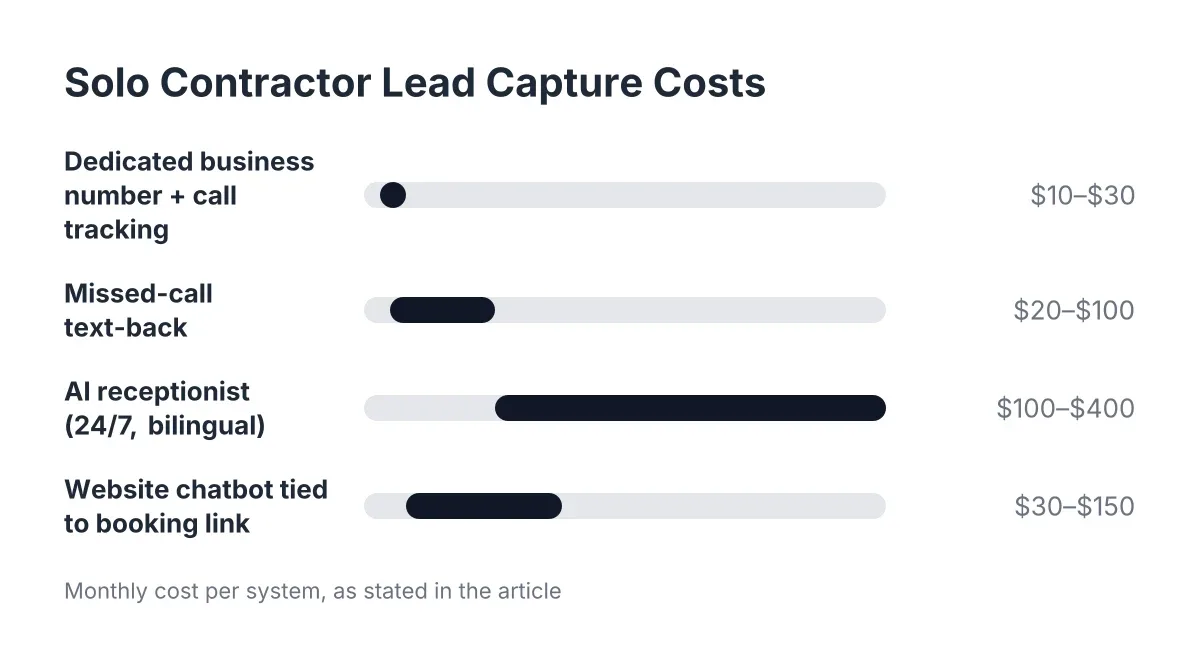
Lead capture is the process of collecting a potential customer's name, contact information, and job details at the moment they reach out. It sounds simple, but most missed calls produce zero captured information, which means the lead is gone. Good lead capture happens on every channel a customer might use: your phone line, your website, and your after-hours voicemail replacement. If you want to know what this typically runs, this cost guide for lead capture breaks down the pricing models.
Lead Qualification
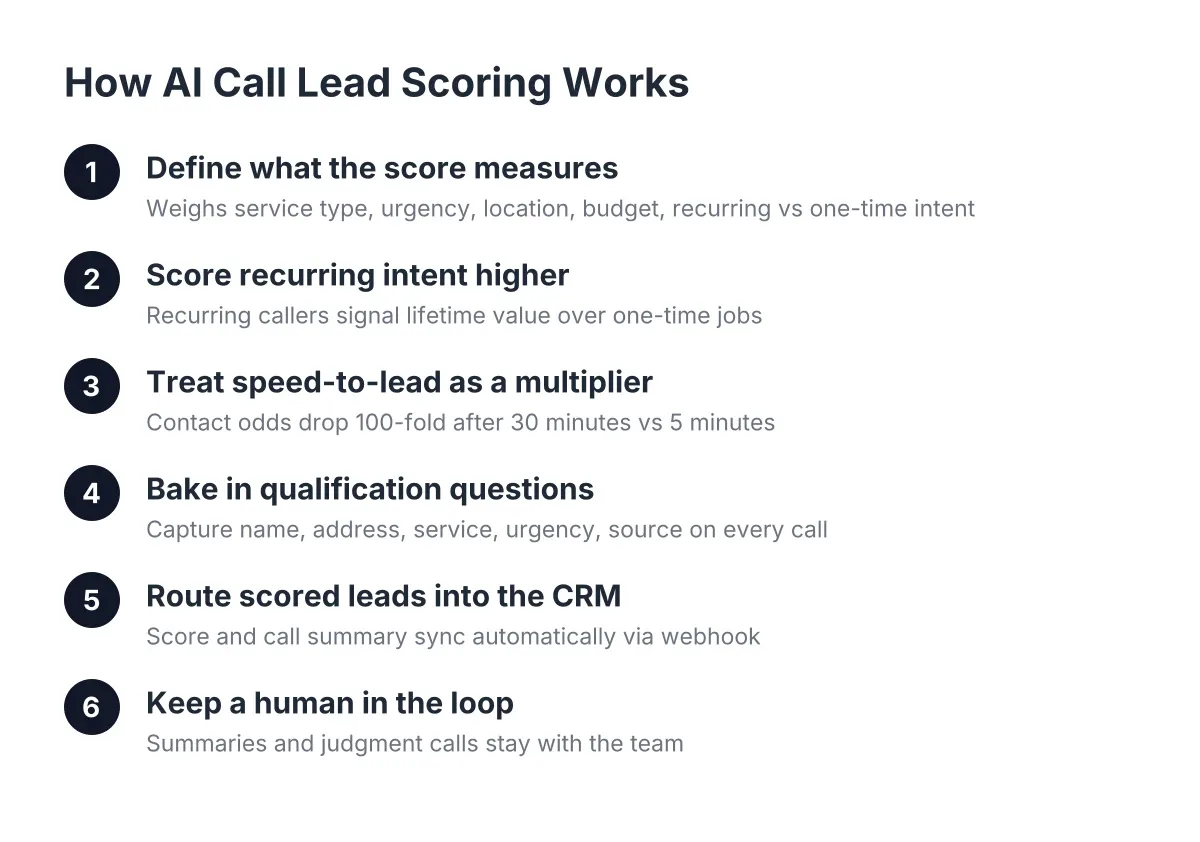
Lead qualification means asking a caller a few questions to figure out whether the job is a fit for your business before you spend time on it. A qualified lead has a real problem, a service area you cover, and a budget or urgency level you can work with. When an AI receptionist qualifies leads, it filters out the tire-kickers and telemarketers so the summaries hitting your phone are jobs worth calling back. Ask any provider exactly what questions their system asks, because weak qualification just moves the sorting work back onto you.
Missed Calls
Missed calls are inbound phone calls that go unanswered or land in voicemail instead of reaching a person or an answering system. In the trades, a missed call during a 95° August afternoon usually means the homeowner with the dead AC dialed your competitor within minutes. Most callers with urgent home problems do not leave voicemails; they keep calling down the search results. This is the core problem every lead capture service exists to solve, so ask providers how many rings pass before their system picks up.
After-Hours Answering
After-hours answering means having your business line covered during evenings, weekends, and holidays when you and your crew are off the clock. Pipes burst at 2 a.m. and water heaters die on Sunday mornings, so a meaningful share of high-urgency leads arrive outside business hours. A 24/7 AI receptionist answers those calls the same way it answers a Tuesday-morning call, captures the lead, and can flag true emergencies. If a provider's coverage has gaps, ask exactly which hours those are.
The Technology: What the Tools Actually Do
AI Receptionist
An AI receptionist is software that answers your phone line with a natural-sounding voice, holds a real conversation with the caller, and captures the lead without a human on your end. Unlike voicemail, it asks questions, books appointments, and sends you a summary of what the caller needs. Unlike a national call center, a well-built one is trained on your services, your service area, and your trade. The honest test is to call one yourself and try to stump it; a provider confident in their AI will invite you to do exactly that.
AI Website Chatbot
An AI website chatbot is a chat window on your website that answers visitor questions, captures contact details, and shares your booking link automatically. About the same homeowner who calls at lunch will type into a chat box at midnight, so it covers the visitors who never pick up the phone. A good one hands you the same clean lead summary a phone call would. Note the language distinction: for the phone product, the correct term is AI receptionist, not chatbot.
Bilingual Answering
Bilingual answering means your phone line handles callers in more than one language, most commonly English and Spanish, without transferring or dropping anyone. In Central Texas, a Spanish-speaking homeowner who reaches an English-only line often hangs up, and that lead disappears with no trace. Systems with bilingual support built into every plan capture those callers the same as any other. Ask whether bilingual coverage costs extra or comes standard; the answer tells you who the provider actually built the product for.
Booking Link
A booking link is a web address that lets a customer pick an open appointment slot on your calendar without anyone playing phone tag. When an AI receptionist texts a booking link during the call, the caller can lock in a time while their motivation is highest. Booked jobs beat callback promises, because a homeowner holding a confirmed slot stops shopping around. For inspiration on the pages those links point to, see these landing page examples for booking contractor appointments.
Live Transfer
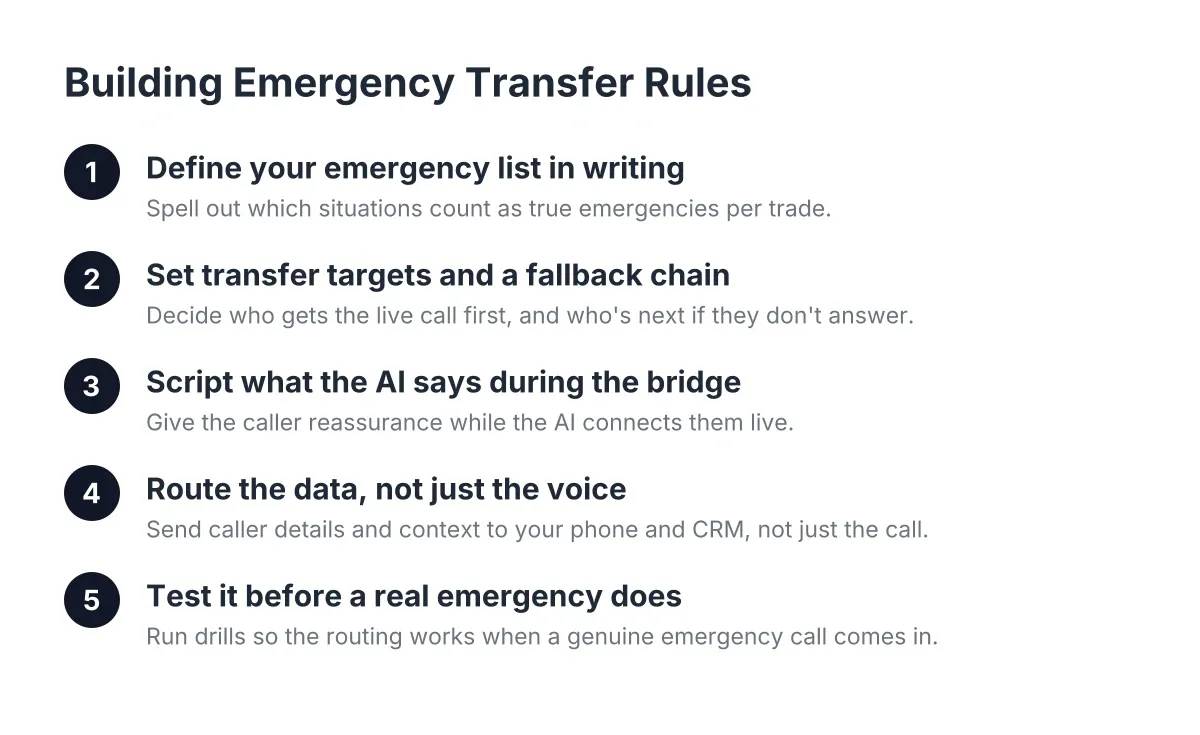
A live transfer is when an answering system connects an urgent caller directly to you or your on-call tech in real time, instead of just taking a message. It matters for true emergencies: a burst pipe or a gas smell cannot wait for a Monday callback. Good systems make live transfer opt-in, so you decide which situations ring your personal phone at midnight. Ask providers how their system decides what counts as urgent, because bad triage either floods your phone or misses the calls that matter.
Call Bridging
Call bridging means connecting you to a lead with one click from a dashboard, so the customer sees your business number instead of your personal cell. It keeps your personal number private and keeps every callback logged in the same place as the original lead. For a busy owner returning calls from the truck between jobs, one-click bridging shaves the friction off every follow-up.
AI Call Intelligence
AI call intelligence is software analysis that scores each call for quality and urgency and produces a short written summary of what the caller wanted. Instead of listening to ten voicemails, you scan ten two-line summaries and call back the hottest lead first. Scoring also shows patterns over time, like which marketing source sends the callers who actually book. A weekly report, such as a Monday morning digest, turns those scores into a picture of where your leads come from.
Plumbing the Data: Where Leads Go After Capture
CRM
A CRM, short for customer relationship management system, is software that stores every customer, lead, and job history in one searchable place. Common examples in the trades include HubSpot, Salesforce, and Zoho. Without one, leads live in text threads, sticky notes, and your memory, and repeat business slips through the cracks. A CRM is how a one-time water heater job becomes a recurring customer worth years of maintenance calls.
Capturing Leads Through CRM Sync
CRM sync means every captured lead flows automatically into your CRM the moment the call or chat ends, with no manual typing. Manual entry is where leads die; a name scribbled on a dashboard notepad rarely makes it into the system. If you already use HubSpot, Salesforce, or Zoho, ask any provider whether sync is included or an add-on. This walkthrough on syncing every lead to your CRM automatically shows how the pieces fit.
Webhook
A webhook is an automatic message one piece of software sends to another the instant something happens, like a new lead arriving. Think of it as a doorbell between apps: the AI receptionist finishes a call, the webhook fires, and your CRM or spreadsheet gets the lead immediately. You never see the webhook itself; you just see leads appearing where you need them. Tools like Zapier use webhooks to connect systems that were never designed to talk to each other.
Lead Response Time
Lead response time is how long it takes your business to follow up after a lead first reaches out. Homeowners with urgent problems commit to whoever responds first, so shrinking this window wins jobs you would otherwise lose. Instant answering plus a booking link sent during the call drives response time toward zero. When you compare providers, ask how fast a lead lands in your hands after the caller hangs up.
Per-Call vs. Flat-Rate Pricing
Per-call pricing charges you for each call handled, while flat-rate pricing charges one predictable monthly fee regardless of volume. Per-call plans can spike during a summer heat wave or a winter freeze, exactly when call volume explodes and you can least afford surprises. Flat-rate plans cost more in slow months but protect you during the busy ones. Before signing anything, read what actually affects AI receptionist pricing for home service businesses so you can judge a quote line by line.
Using These Terms
You now know enough to read a lead capture quote line by line and ask the questions that expose weak spots: What happens after-hours? Is Spanish included? Where does the lead go when the call ends? Keep this lead capture for contractors glossary handy the next time a sales rep starts talking fast, and remember the simplest test of all: call the system yourself and see if it earns the job.
If you're losing revenue to missed calls, NeverMiss ATX can help.
Prefer to talk it through? Call (512) 980-9267 — a quick call is usually the fastest way to get a straight answer for your situation.