Answering Service Cost Terms Explained: A Plain-English Glossary
If you run a home service business and you're comparing quotes for phone coverage, this answering service cost glossary is for you. Pricing pages love jargon: per-minute billing, overage fees, patching, ring delay. This page turns each of those terms into plain English so you can read a quote line by line, ask sharper questions, and spot the fees that quietly stack up. Every definition stands on its own, so skim to the term that confused you and get back to work.
- Per-Minute Billing
- Per-Call Pricing
- Flat-Rate (Subscription) Pricing
- Setup Fee
- Minimum Commitment
- Overage Fees
- Answered Call vs. Handled Call
- Lead Capture
- Lead Qualification
- Call Scripting
- After-Hours Coverage
- Bilingual Answering
- What Answering Service Costs for Live Transfer (Call Patching)
- Message Delivery
- Ring Delay
- Abandonment Rate
- Statement Rounding
- Answering Service Cost Per Lead
How Providers Charge
Per-Minute Billing
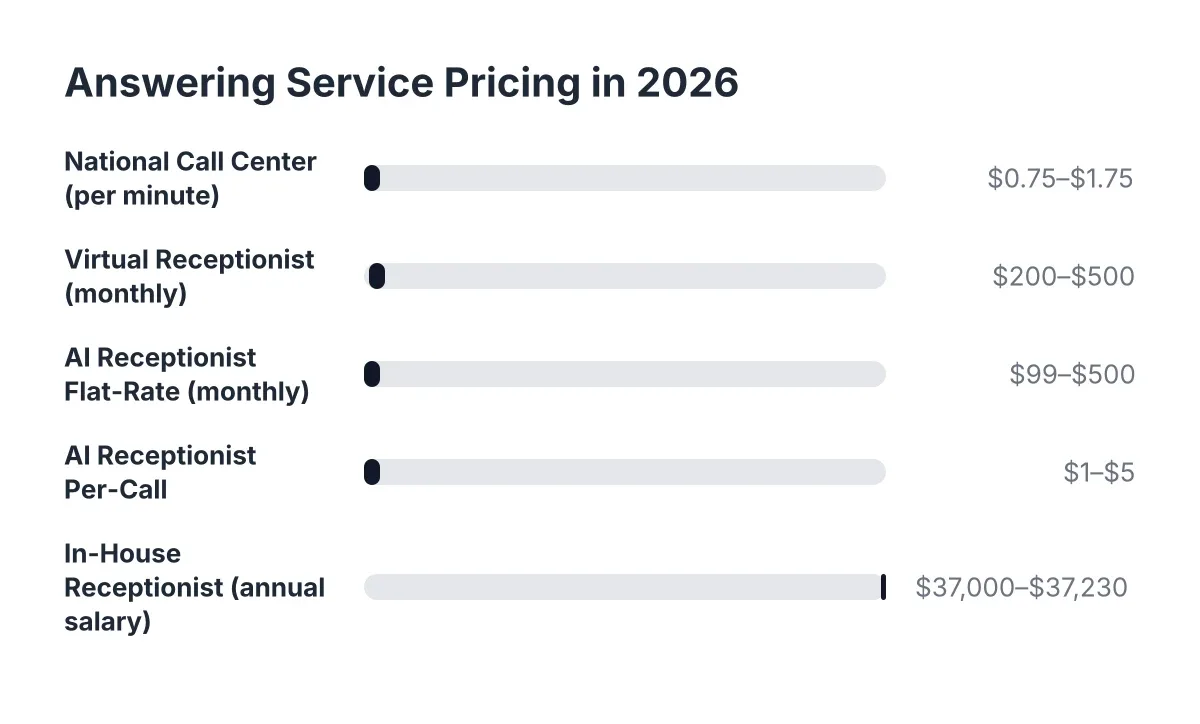
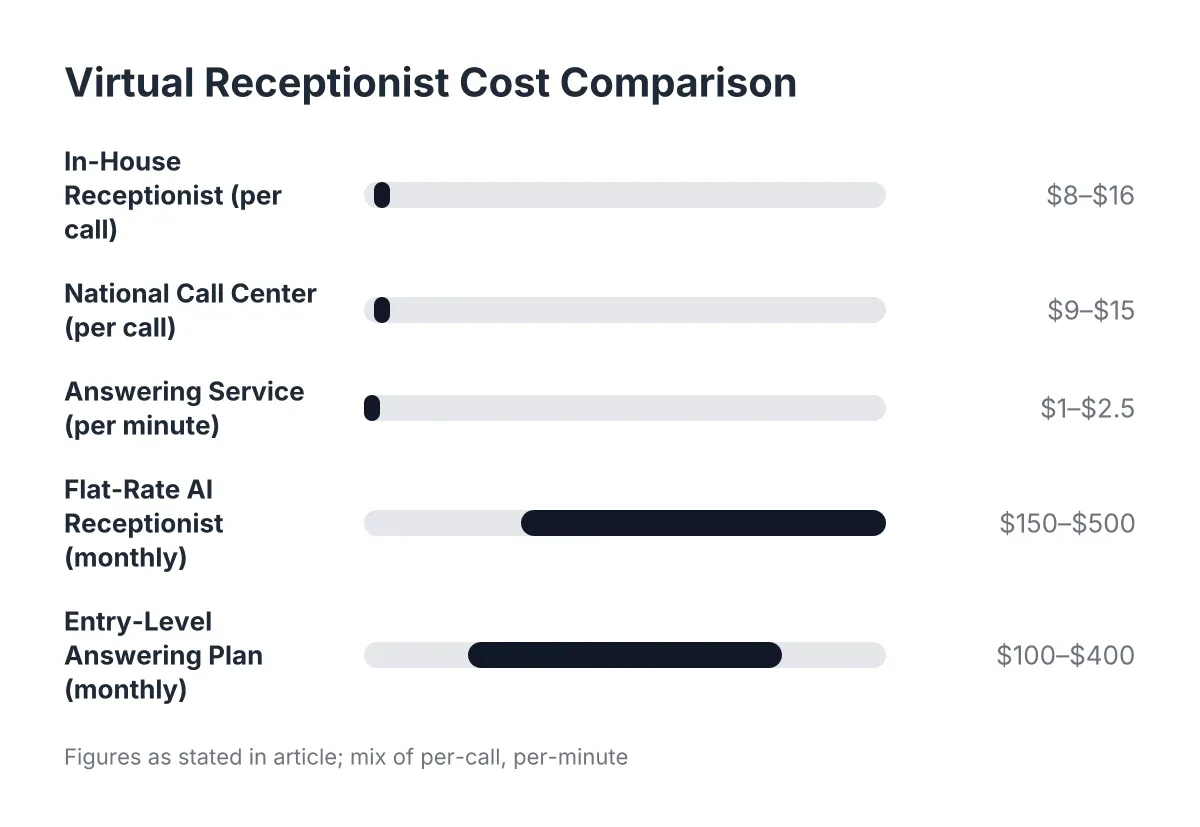
Per-minute billing means the provider charges you for every minute an operator or system spends on your calls, usually rounded up. It sounds cheap until a chatty caller turns a two-minute booking into a nine-minute conversation you pay for. If a quote leads with a low monthly number, check whether minutes are billed on top. Ask exactly when the clock starts and stops, because some providers bill from the first ring, not the first word.
Per-Call Pricing
Per-call pricing means you pay a flat fee for each call answered, regardless of how long it lasts. This model is easier to predict than per-minute billing if your calls tend to run long. The catch is how the provider defines a call: some count hang-ups, wrong numbers, and spam calls the same as a real lead. Get that definition in writing before you sign. The full breakdown of setup, per-call, and monthly fees shows how these models compare in practice.
Flat-Rate (Subscription) Pricing
Flat-rate pricing means you pay one fixed monthly price for a set level of service, no matter how many calls come in. For a busy trade, this is the easiest model to budget around, especially during a Central Texas summer when the phone will not stop. The thing to check is what the flat rate actually covers: some plans cap calls or minutes and charge extra past the cap. A true flat rate has no surprise line items at the end of the month.
Setup Fee
A setup fee is a one-time charge for getting your account configured, including your call script, greeting, and any integrations. National call centers often charge it to cover training human operators on your business. A high setup fee can wipe out months of savings from a low monthly rate, so weigh both numbers together. If setup involves you filling out a form and testing a phone number, question why the fee is large.
Minimum Commitment
A minimum commitment is the shortest contract length or lowest monthly spend a provider requires before you can cancel without penalty. Twelve-month contracts are common with traditional answering services. That matters because call volume in the trades swings with the seasons, and you want the freedom to adjust. Month-to-month terms tell you the provider expects to earn your business every four weeks.
Overage Fees
Overage fees are extra charges that kick in when you use more calls or minutes than your plan includes. This is where a cheap plan gets expensive: a burst-pipe cold snap or a 95° week can double your call volume overnight, and overage rates usually run higher than your base rate. Ask for the exact overage price per call or minute before you sign. A provider confident in its pricing will show you that number without being asked twice.
What You're Actually Paying For
Answered Call vs. Handled Call
An answered call is any call the service picks up, while a handled call is one where the service actually did something useful, like capturing the lead or booking the appointment. Some providers bill you the same for both. That distinction drives your real answering service cost, because paying full price for a ten-second robocall pickup is money down the drain. Ask how spam, hang-ups, and misdials are counted and billed. If the sales rep dodges the question, the answer is probably "you pay for all of them."
Lead Capture
Lead capture means recording a caller's name, contact details, and job details so you can follow up and win the work. This is the entire point of paying for phone coverage: a missed call from a homeowner with a water heater leak is a lost job, and often a lost recurring customer. When comparing services, ask exactly what information gets captured and how it reaches you. A message that says "someone called about plumbing" is not lead capture; it is expensive voicemail.
Lead Qualification
Lead qualification means asking callers the right questions to figure out whether they are a real job for you: what the problem is, where they are, and how urgent it is. A service that qualifies leads saves you from driving across town for work you do not do. Without qualification, you pay to have every call answered but still spend your own time sorting good leads from tire kickers. An AI receptionist can qualify on every call, at 2 a.m. or 2 p.m., using the same questions you would ask.
Call Scripting
Call scripting is the set of questions, greetings, and instructions a service follows when answering your phone. With human operators, longer or more customized scripts often cost more, because they take more training and more talk time. Your script decides whether callers hear a generic operator or something that sounds like your business. Ask whether script changes cost extra; some providers charge every time you tweak a question.
After-Hours Coverage
After-hours coverage means your phone gets answered outside normal business hours, including nights, weekends, and holidays. Traditional services often price after-hours as a premium add-on, sometimes at a higher per-minute rate. For the trades, after-hours is when emergencies happen and when a fast answer wins the job over the next name in the search results. True 24/7 coverage should mean one price around the clock, so read the fine print on nights and Sundays.
Bilingual Answering
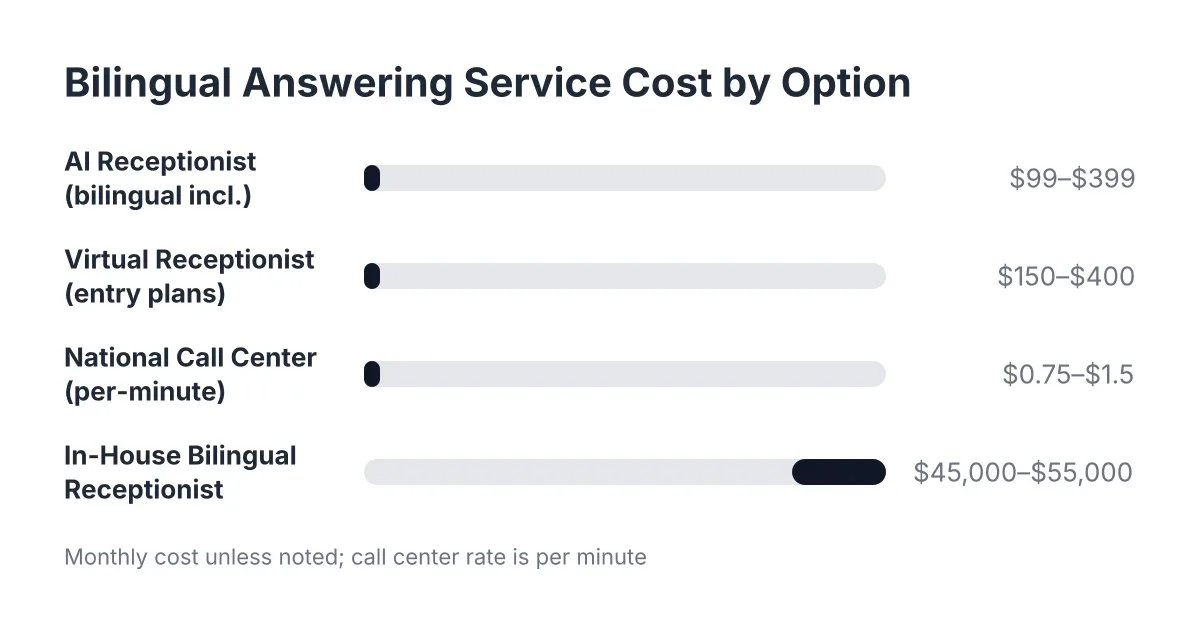
Bilingual answering means the service can handle calls in more than one language, most commonly English and Spanish. Many national services charge extra for Spanish-speaking operators or route those calls to a separate queue with longer waits. In Central Texas, turning away Spanish-speaking callers means turning away a large share of your market. Check whether bilingual support is included on every plan or billed as an upgrade.
What Answering Service Costs for Live Transfer (Call Patching)
A live transfer, also called call patching, means the service connects an active caller directly to you or your on-call tech in real time. Providers often bill patching by the minute for the whole connected call, which adds up fast on long conversations. It is worth paying for on genuine emergencies, like a flooding kitchen at midnight, and worth skipping on routine bookings. Look for services where live transfer is opt-in for urgent calls, so you control when your phone rings on site.
Message Delivery
Message delivery is how the service gets call details to you, whether by text, email, app notification, or a sync into your CRM. Some traditional services charge per message or per delivery method, which is a fee for information you already paid to collect. A call summary that lands in your CRM automatically beats a voicemail you have to replay from the truck. Ask what delivery is included and whether summaries include the details you need to call back ready to quote.
Reading the Quote and the Fine Print
Ring Delay
Ring delay is the number of rings a caller hears before the service picks up. It matters because callers with an urgent problem hang up fast and dial the next business on the list. Some services quietly run longer delays during busy periods, which turns your paid coverage into missed calls. Ask what the average answer time is and whether it holds at 6 p.m. on a Friday.
Abandonment Rate
Abandonment rate is the percentage of callers who hang up before the service answers. A low monthly price means nothing if a chunk of your callers never reach a human or an AI receptionist at all. Human-staffed call centers see abandonment climb when their queues back up across all their clients, not just yours. Ask any provider for their abandonment numbers; a good one tracks this and will tell you.
Statement Rounding
Statement rounding is the practice of rounding each call's duration up to the next billing increment, such as the next full minute or 30-second block. A 65-second call billed in one-minute increments costs you two minutes. Across hundreds of calls a month, rounding alone can add a meaningful chunk to your bill. Ask what the billing increment is; six-second increments are far friendlier than one-minute increments.
Answering Service Cost Per Lead
Cost per lead is your total monthly answering bill divided by the number of real, usable leads the service delivered. This is the number that actually matters, more than the sticker price of any plan. A cheap service that fumbles bookings can cost more per lead than a pricier one that captures and qualifies every caller. Crew size changes this math too; see how the numbers shift for a solo plumber versus a 10-person crew. If you are still comparing baseline prices, start with the full guide to what answering services cost.
Using These Terms
You now have the vocabulary to read any quote line by line and ask the questions that make sales reps sit up straight: what counts as a call, what triggers overage, and what a lead actually costs. Keep this answering service cost glossary open the next time you compare providers, and do not sign anything until every fee on the page has a plain-English answer. If a provider cannot explain a line item as clearly as this answering service cost glossary just did, that tells you something too.
If you're losing revenue to missed calls, NeverMiss ATX can help.
Prefer to talk it through? Call (512) 980-9267 — a quick call is usually the fastest way to get a straight answer for your situation.