AI Receptionist vs. Hiring Part-Time Help: The Real Cost Breakdown for Austin Trades
You already know the math is ugly. Your crew is on site all day, nobody picks up the phone, and the after-hours calls, the burst pipes at 11 p.m., the breaker panels smoking on a Sunday, go straight to voicemail. So you start comparing an AI receptionist to hiring part-time front-desk help, and the numbers deserve a straight answer. This breakdown runs the real 2026 costs in an AI receptionist cost breakdown for Austin home service businesses: what each option costs per month, what each one actually covers, and which one captures the after-hours revenue window that trades in Central Texas keep leaving on the table.
Here is the short version before we get into the list. A part-time receptionist covers 20 to 25 hours a week during business hours. An AI receptionist covers 168 hours a week, including the nights and weekends when a large share of emergency plumbing, electrical, and pest calls actually come in. The rest of this article walks through eight specific comparisons so you can decide with real numbers instead of a gut feeling.
1. The Baseline Numbers: What an AI Receptionist Costs vs. Part-Time Hiring
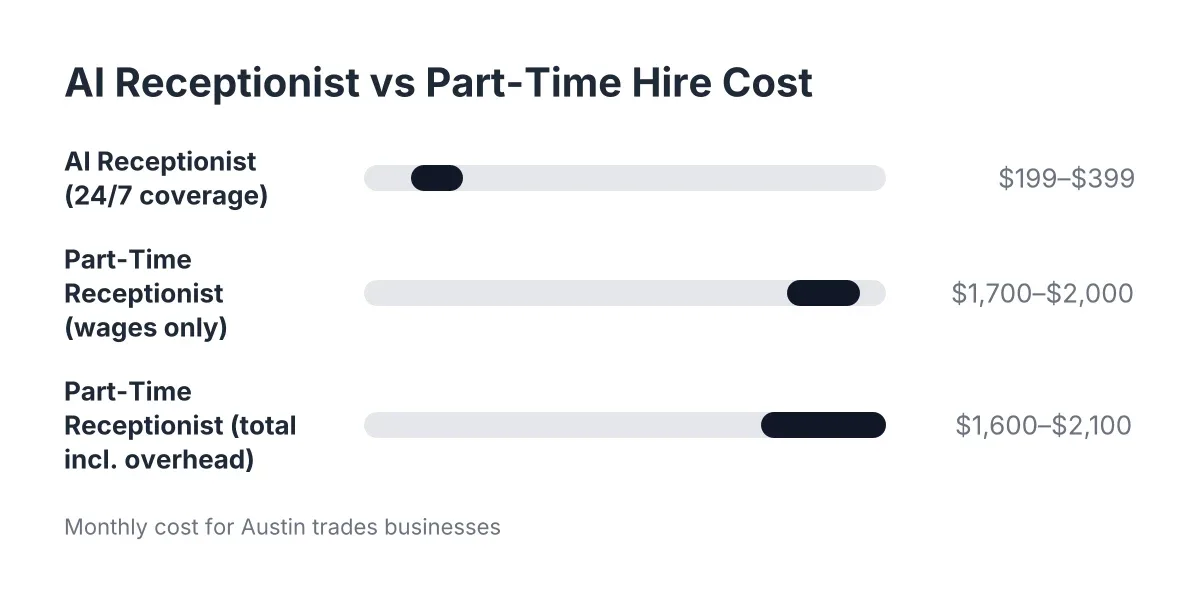
A part-time receptionist in Austin costs roughly $1,600 to $2,100 per month for 20 to 25 hours a week; an AI receptionist for trades typically runs $199 to $399 per month for 24/7 coverage. That is the core of the cost breakdown, and the gap widens once you add taxes, training, and turnover.
According to the U.S. Bureau of Labor Statistics, the median hourly wage for receptionists in the U.S. was $17.90 in May 2024, about $37,230 per year before benefits or overtime. Austin wages run at or above that median because of local cost of living. At $18 to $21 an hour for 22 hours a week, you are paying about $1,700 to $2,000 monthly in wages alone.
Stack the two options side by side for a typical small crew:
- Part-time receptionist: $1,700 to $2,000/month in wages, plus payroll taxes (roughly 8 to 10 percent), plus recruiting, training, and coverage gaps for sick days and vacations
- AI receptionist: $199 to $399/month flat, no payroll taxes, no training ramp, no sick days, live 24/7 from day one
- Annual difference: an estimated $18,000 to $22,000 in direct cost, before you count a single after-hours job captured
2. Coverage Hours: 25 Hours a Week vs. 168
Part-time hiring buys you business-hours coverage. It does nothing for the after-hours window, which for emergency trades is where the highest-urgency, highest-ticket calls live. A homeowner in Pflugerville with water pouring through a ceiling at 2 a.m. is not waiting until 9 a.m. to find a plumber. They call down the list until someone answers.
However, this is exactly the window a part-time hire cannot cover without night-shift pay, scheduling headaches, or a second hire. An AI receptionist answers at 2 a.m. the same way it answers at 2 p.m., qualifies the caller, captures the lead, and can live-transfer genuine emergencies to your on-call tech if you opt in. Nights, weekends, and holidays stop being missed calls and start being booked jobs.
3. Speed to Lead: Why Voicemail Loses Jobs and Fast Answers Win Them
Speed decides who gets the job in emergency trades, and the research is blunt about it. A foundational MIT Sloan / InsideSales.com study found that the odds of contacting a lead drop 100-fold, and the odds of qualifying that lead drop 21-fold, when the callback happens at 30 minutes instead of within 5 minutes.
A part-time receptionist who left at 1 p.m. cannot return a 6 p.m. call until the next morning. By then, that lead has hired the competitor who picked up. Instant after-hours call answering keeps you inside that five-minute window every single time, which is the whole reason overflow and after-hours coverage pays for itself so fast.
4. What Part-Time Hiring Actually Costs Beyond the Paycheck
The wage is only the visible part of a part-time hire. The hidden costs are what surprise most small crew owners in their first year of having front-desk help.
For example, budget for these line items before you post the job:
- Recruiting and onboarding: job ads, interview hours you spend off the tools, and an estimated two to four weeks before a new hire handles calls confidently
- Payroll overhead: employer taxes, workers' comp, and payroll software, adding roughly 10 to 15 percent on top of wages
- Turnover: front-desk roles turn over often, and every departure restarts the recruiting and training clock
- Coverage gaps: sick days, vacations, and appointments mean the phone still goes unanswered some business hours, let alone after hours
- Management time: you become the trainer, scheduler, and backup answerer, which pulls you off jobs
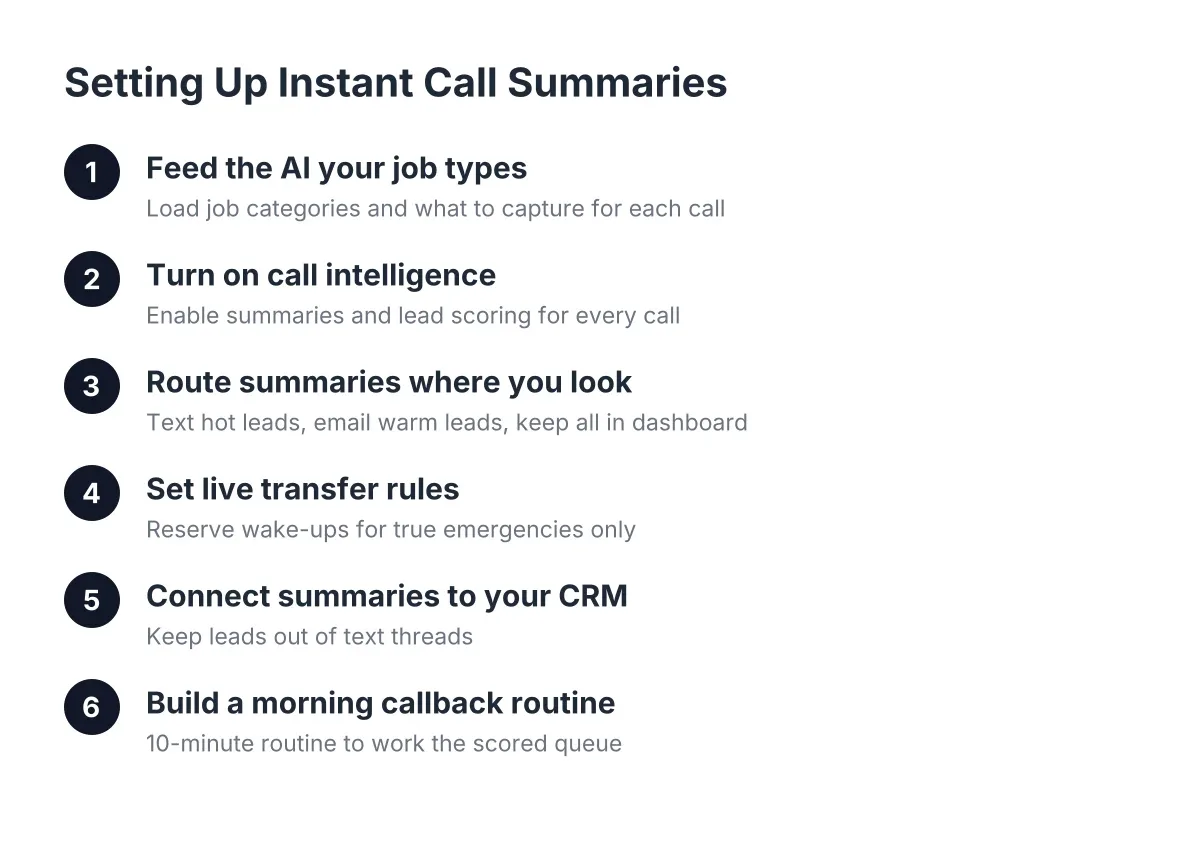
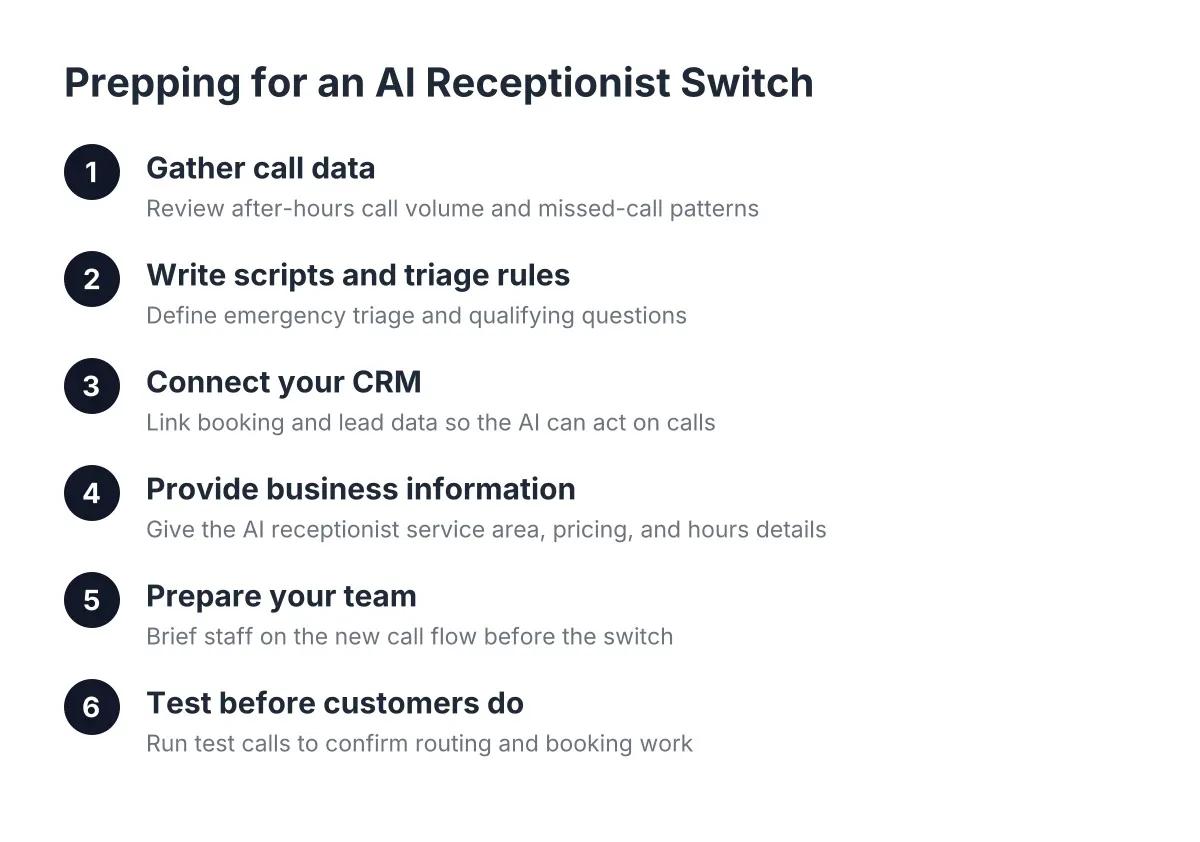
By contrast, an AI receptionist has a setup conversation, not a hiring pipeline. You feed it your services, service area, pricing guardrails, and emergency criteria once, and it answers correctly on the first day and the five hundredth.
5. Bilingual Coverage: Where the AI Receptionist Cost Advantage Shines
Hiring a bilingual part-time receptionist in Austin narrows your candidate pool and typically pushes the wage up. Yet for trades serving Austin, Round Rock, and Georgetown, Spanish-speaking callers are a meaningful share of your customer base, and a receptionist who cannot serve them is capturing only part of your leads.
An AI receptionist built for this market handles English and Spanish on every call, on every plan, at no added cost. The caller hears their language, gets qualified the same way, and gets booked the same way. That is one line item where the comparison is not even close on price or consistency.
6. Emergency Triage: Where Both Options Need Clear Rules
Neither a part-time hire nor an AI receptionist should diagnose a gas leak over the phone; both need clear triage rules you define. The honest trade-off is this: a seasoned human can improvise on a strange call, while an AI receptionist follows your playbook with total consistency but will not freelance beyond it.
For emergency trades, that consistency is usually the safer bet at 3 a.m. You set the criteria: active water leak, no power to the whole panel, or suspected gas smell triggers a live transfer to your on-call tech; everything else gets captured, qualified, and booked for morning. A tired part-time hire, or you answering from bed, applies those rules unevenly. The AI applies them the same way every time, and true life-safety situations still get routed to a human or to 911 guidance, where they belong.
7. Lead Quality and Follow-Up: What Happens After the Call
A part-time receptionist writes messages on a notepad or in a shared inbox; an AI receptionist scores every call, summarizes it, and syncs the lead straight into your CRM. That difference shows up in how many captured leads actually turn into booked, recurring customers.
With call intelligence and CRM sync through Zapier, HubSpot, Salesforce, or Zoho, every after-hours caller lands in your pipeline with a summary, a score, and a callback number you can dial in one click from the dashboard. Consumers are ready for this too; a Five9 survey found 84 percent of consumers are aware that companies use AI to handle customer service interactions. Callers care about getting helped fast, not about who or what picked up.
8. Run Your Own Numbers: AI Receptionist Cost Compared to Part-Time Staff
Suppose you run a three-tech plumbing crew in Cedar Park doing $350K a year, and you currently miss most calls that come in after 6 p.m. and on weekends. Say those missed calls represent an estimated 8 to 12 real jobs a month at an average ticket of $400 to $900. In that scenario, after-hours misses alone cost you an estimated $3,500 to $8,000 in monthly revenue, against a $199 to $399 monthly cost to capture them automatically.
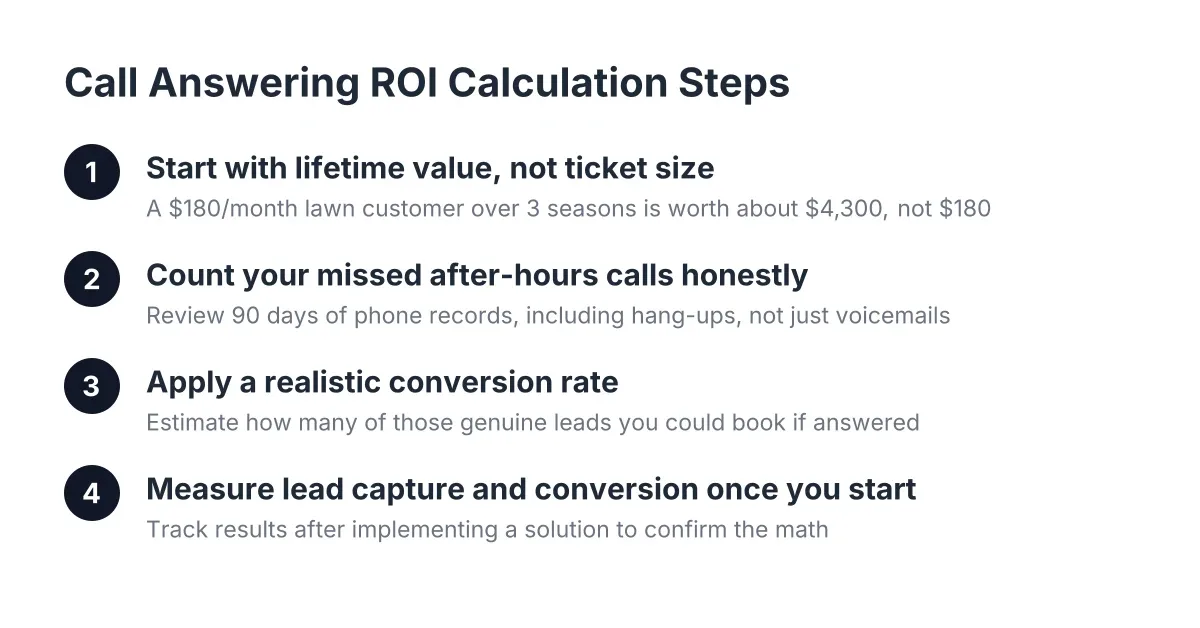
Run that same math with your own call volume before you decide. Pull your phone records for the last 90 days, count calls received outside business hours, and multiply by your average ticket and close rate. If the number is bigger than a part-time salary, the decision on AI receptionist cost answers itself; if your after-hours volume is genuinely tiny, a business-hours hire might serve you better, and it is worth saying so plainly.
One more data point worth knowing: this is not about cutting your team. According to NFIB's Small Business and Technology Survey, 98 percent of small employers using AI reported no change in employee headcount. Owners use tools like this to capture what was slipping away, then hire techs, not admin staff, when the extra jobs justify it.
The Bottom Line for Austin Trades in 2026
For emergency and high-urgency trades in Central Texas, the cost breakdown lands in one place. Part-time hiring costs an estimated $20,000-plus a year for 25 business hours a week; an AI receptionist costs $2,400 to $4,800 a year for all 168, in English and Spanish, with triage rules you control.
The same NFIB research found only 24 percent of small employers currently use AI tools for business activity. That gap is a competitive opening for the crews who move first. While your competitor's phone rings to voicemail at 10 p.m. on a Saturday, yours gets answered, the lead gets qualified, and the job gets booked before anyone else in Austin wakes up.
If you're losing revenue to missed calls, NeverMiss ATX can help.
Prefer to talk it through? (817) 632-6983 — a quick call is usually the fastest way to get a straight answer for your situation.